Silicone Coated Fiberglass Temperature Resistance
Overview:Learn the temperature resistance of silicone coated fiberglass fabric, its continuous operating limits, heat-resistant properties, applications, and material selection tips.
Silicone coated fiberglass fabric combines the strength of fiberglass cloth with the flexibility and surface protection of a silicone rubber coating. It is widely used in industrial insulation, welding protection, fire-resistant covers, expansion joints, and thermal shielding.
How much heat can silicone coated fiberglass fabric withstand? The temperature resistance depends on both the fiberglass substrate and the silicone coating. Many standard products are designed for continuous service around 200°C to 260°C, while the fiberglass substrate itself can tolerate much higher temperatures. The coating may degrade before the underlying fabric reaches its thermal limit.
1. What Is the Temperature Resistance of Silicone Coated Fiberglass?
Silicone coated fiberglass fabric does not have one universal temperature rating. Performance varies according to the base fabric, coating formulation, coating thickness, and exposure conditions.
| Performance Parameter | Typical Reference Range |
|---|---|
| Continuous operating temperature | Approximately 200°C to 260°C |
| Short-term heat exposure | May tolerate higher temperatures, depending on the product |
| Fiberglass substrate | Often rated for substantially higher temperatures than the coating |
| Main temperature limitation | The silicone coating and the finished fabric construction |
These figures are general industry reference values, not guaranteed specifications. Always confirm the manufacturer's technical data sheet for the exact product, especially when the fabric will be exposed to direct flames, hot particles, or prolonged high temperatures.
2. Why Does the Silicone Coating Affect Heat Resistance?
Fiberglass provides the fabric's structural reinforcement and inherent heat resistance. The silicone coating adds flexibility, improved handling, and resistance to moisture and certain environmental conditions.
However, silicone rubber has its own operating temperature limits. Under excessive heat, the coating may harden, discolor, crack, or lose adhesion even when the fiberglass substrate remains intact.
For this reason, the temperature rating of silicone coated fiberglass fabric should be based on the finished product, not the fiberglass substrate alone.
3. Silicone Coated Fiberglass vs. Uncoated Fiberglass
| Feature | Silicone Coated Fiberglass | Uncoated Fiberglass |
|---|---|---|
| Surface | Smooth, coated surface | Exposed woven glass fibers |
| Flexibility | Depends on coating and fabric construction | Depends on yarn and weave |
| Moisture resistance | Generally improved | Usually lower without additional treatment |
| Surface durability | Coating can improve abrasion and handling performance | Depends on fabric construction and finish |
| Temperature limitation | Often governed by the silicone coating | Governed by the glass composition and fabric construction |
| Typical applications | Industrial covers, removable insulation jackets, fire protection products | Thermal insulation, welding blankets, industrial curtains |
Neither material is universally better. The right choice depends on operating temperature, environmental exposure, mechanical requirements, and budget.
4. Where Is Silicone Coated Fiberglass Fabric Used?
Silicone coated fiberglass fabric is widely used for removable insulation covers, flexible expansion joints, industrial fire barriers, welding protection, equipment covers, and thermal insulation systems.
It is particularly useful when an application requires a combination of heat resistance, flexibility, and a coated surface. For extreme-temperature applications, high silica fabric or other specialized materials may be more appropriate.
5. How to Choose the Right Silicone Coated Fiberglass Fabric
Before purchasing, confirm four key factors:
-
• Operating temperature: Distinguish continuous service temperature from short-term peak exposure.
-
• Exposure conditions: Consider direct flame, sparks, hot particles, moisture, and chemical contact.
-
• Fabric specifications: Check base fabric weight, thickness, coating type, and coating thickness.
-
• Application requirements: Confirm flexibility, mechanical strength, dimensional requirements, and applicable safety standards.
For OEM projects, manufacturers can discuss fabric weight, coating color, roll width, thickness, and other specifications according to production capability and order requirements.
6. Silicone Coated Fiberglass Fabric Manufacturer
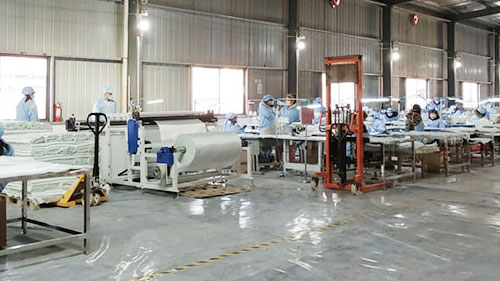
Henan Youan Composite New Materials Co., Ltd. manufactures fiberglass fabrics, silicone coated fiberglass fabrics, high silica fabrics, and other high-temperature fire protection materials.
We support customized material specifications for industrial insulation, welding protection, fire-resistant covers, and related applications. Our team can help B2B buyers evaluate suitable fabric constructions based on temperature requirements and intended use.
Looking for silicone coated fiberglass fabric for your project? Contact our team with your required temperature rating, fabric width, thickness, coating specifications, and estimated order quantity to discuss a suitable solution.
Frequently Asked Questions
Can silicone coated fiberglass withstand 500°C?
Most standard silicone coated fiberglass fabrics are not intended for continuous operation at 500°C. Although the fiberglass substrate may tolerate higher temperatures, the silicone coating can become the limiting factor. Verify the finished product's tested temperature rating before use.
Is silicone coated fiberglass fireproof?
It is designed for heat-resistant and fire protection applications, but performance depends on the fabric, coating, and test method. Do not assume that every product is suitable for direct flame exposure or certified for a particular fire protection application.
What is the difference between working temperature and peak temperature?
Working temperature refers to the temperature a material can withstand under specified continuous operating conditions. Peak temperature refers to a higher temperature experienced for a limited period. These values are not interchangeable.
Can silicone coated fiberglass fabric be customized?
Yes. Depending on production capability and order quantity, manufacturers may offer customized fabric weight, thickness, width, coating color, and other specifications for OEM projects.
Product recommend: Different colors high temperature silicone coated fiberglass cloth